Electronic Manufacturing Services · Dorval, Québec · Established 1993
Home/Through-Hole & Mixed Assembly
Through-hole assembly

Through-Hole & Mixed-Technology PCB Assembly

Connectors, transformers, large capacitors and other parts that need mechanical strength still go through the board. JLS assembles through-hole components with automated axial insertion and skilled manual assembly, solders them by wave, and combines them with SMT on mixed-technology boards.

Since 1993IPC-610 Class 2Quotes in 48 hDorval, Québec
At a glance

Strength where your board needs it

Through-hole technology (THT) mounts components by passing their leads through drilled, plated holes and soldering them on the other side. It is still the best choice for parts that carry high current, get plugged and unplugged, or need to survive vibration.

Most modern boards mix both technologies. We handle surface-mount and through-hole on the same board, using reflow for SMT and wave soldering for through-hole parts.

InsertionAutomated axial placement and manual assembly
SolderingWave soldering · RoHS (lead-free) or non-RoHS
ChemistryAqueous-clean or no-clean
Mixed boardsSMT and through-hole on the same board
InspectionAOI on every board · functional testing
WorkmanshipIPC-A-610 Class 2
QuantitiesPrototypes to production · no minimum
Capabilities

Through-hole, done right

Automated where it helps, by hand where it matters.

Automated axial insertion

Axial components such as resistors and diodes inserted by machine for speed and consistency.

Skilled manual assembly

Connectors, transformers, relays and odd-form parts placed by experienced technicians.

Wave soldering

Through-hole joints soldered in one pass over a wave of molten solder.

Mixed-technology boards

Reflow for SMT, wave for through-hole — on the same board.

Lead-free or leaded

RoHS or non-RoHS soldering with aqueous or no-clean chemistry.

Legacy designs

Older through-hole-heavy boards rebuilt — with reverse engineering if the files are lost.

How it works

How a through-hole build works

1

File review

An engineer reviews your files and quotes, usually within 48 hours.

2

SMT first

On mixed boards, surface-mount parts are placed and reflowed first.

3

Insertion

Axial parts are inserted by machine; the rest are placed by hand.

4

Wave soldering

Through-hole joints are soldered by wave.

5

Inspect & test

AOI on every board, plus functional testing.

Why JLS

Why JLS for through-hole work

✓

Machines and hands

Automated axial insertion plus experienced manual assemblers.

✓

Both technologies, one supplier

SMT and through-hole under one roof.

✓

Legacy friendly

Reverse engineering and Gerber edits for older designs.

✓

30+ years in Dorval

Building boards in Québec since 1993.
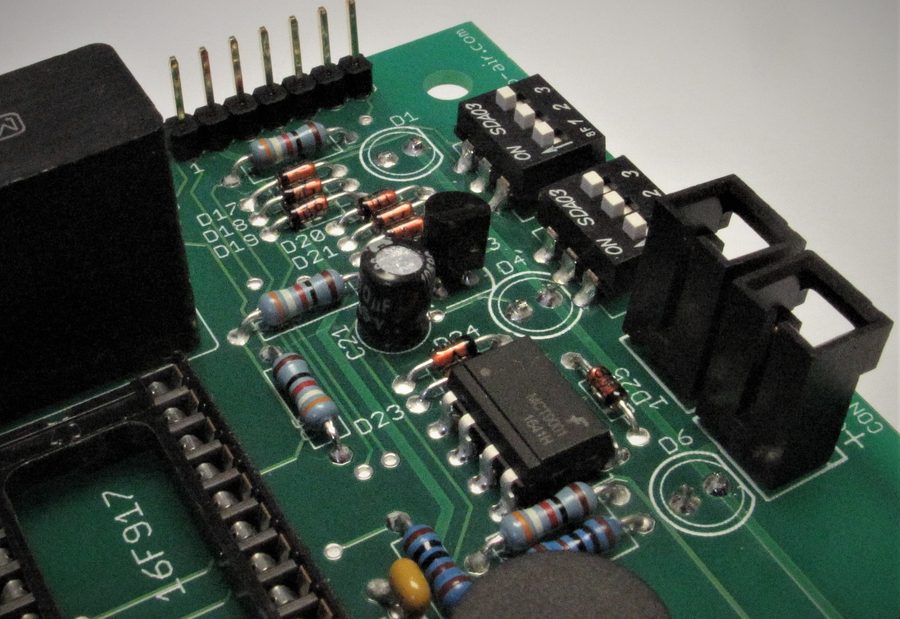
Through-hole and mixed-technology circuit board
FAQ

Frequently asked questions

Do you still do through-hole PCB assembly?

Yes. We assemble through-hole components with automated axial insertion and manual assembly, and solder them by wave.

Can you build boards with both SMT and through-hole parts?

Yes. Mixed-technology boards are common: we reflow the surface-mount parts and wave-solder the through-hole parts on the same board.

Is through-hole soldering available lead-free?

Yes. We solder RoHS (lead-free) or non-RoHS assemblies, with aqueous or no-clean chemistry.

Can you rebuild an old through-hole board without design files?

Yes. We reverse engineer legacy boards from a physical sample, provided you own the design or have the right to reproduce it.

Is there a minimum order quantity?

No. We build from single prototypes to production runs.

Related services & industries

Get your through-hole boards built

Send your files or describe your project. An engineer reviews every request, and most quotes go out within 48 hours.

Get a quote →